
When a solopreneur hits a task they cannot do alone, 86% now try AI before hiring a human. That is the headline finding of FreshBooks’ September 2026 report “The Era of the Solopreneur,” based on a Wakefield Research survey of 500 solopreneurs and microbusiness owners Intelligent SME; FreshBooks press release.
Nine in ten respondents say AI makes it easier for one person to start and run a business. And among those already using the tools, 98% report hitting business or client goals they could not have reached otherwise, according to FreshBooks.
So the question is no longer whether AI can help a one-person business. It can. The question is how to decide what AI handles, what still needs a person, and how to run the whole thing without quality slipping. That is what this playbook covers.
What the numbers actually say
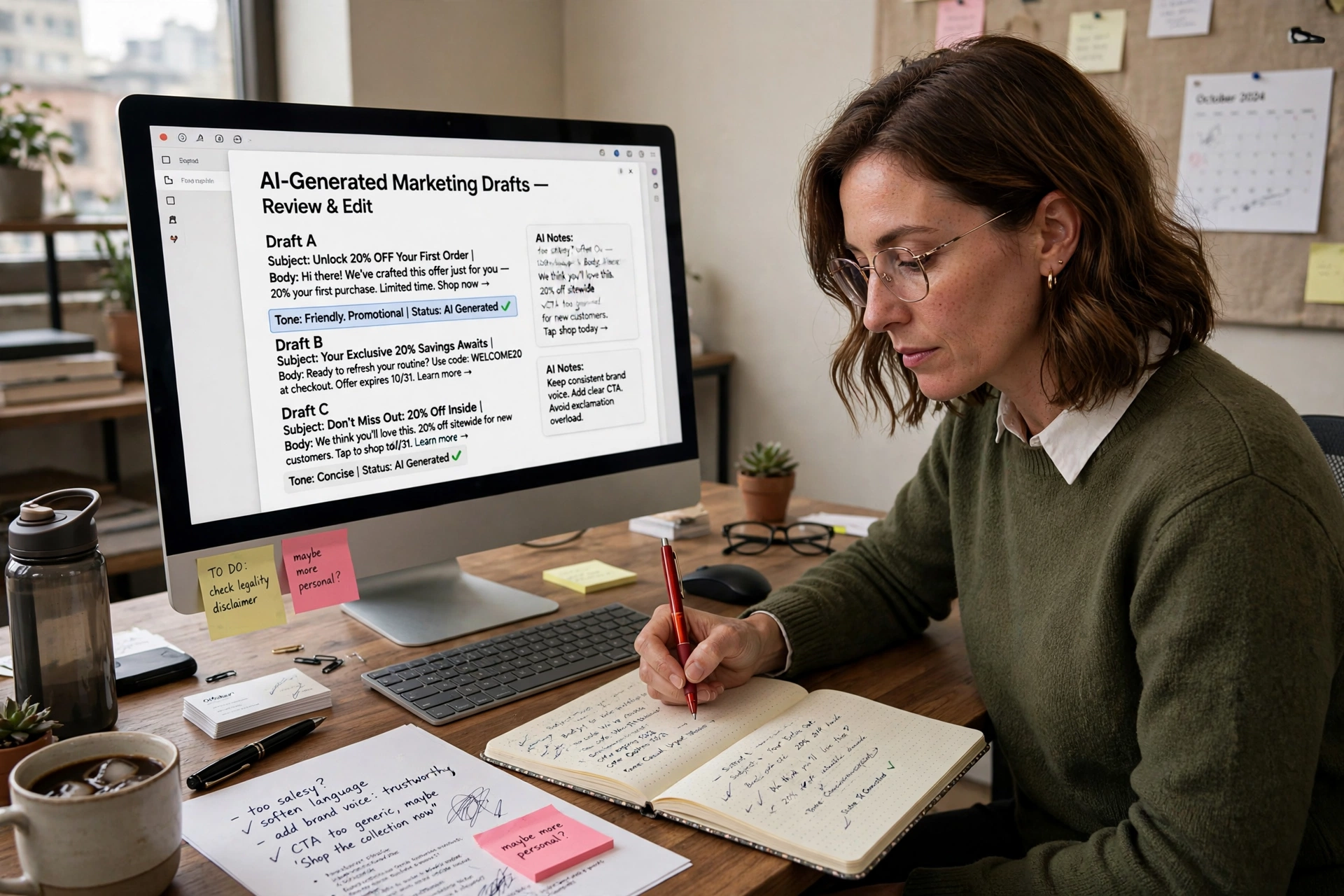
A few details matter before the advice, because they shape the whole picture.
The survey covered 500 solopreneurs and microbusiness owners in the United States, polled between June 22 and July 1, 2026. These are real one-person and tiny-team businesses, not tech enthusiasts. When they were asked what they do upon hitting a task they cannot complete on their own, 86% said they try AI before paying someone FreshBooks press release.
Hiring a contractor used to be the default answer to hitting your own ceiling. For most respondents, it is now the second answer.
One result cuts against the usual productivity story. Asked which capability would matter more to their future success, 64% chose the ability to appear bigger and more capable than their actual size, while only 36% chose getting more done without adding time, staff, or cost (Intelligent SME). In other words, most solopreneurs do not just want AI to save hours. They want it to let a one-person business serve clients like a five-person business.
FreshBooks CEO Shaheen Javadizadeh framed the shift this way: the question is becoming whether AI can help take on a client or deliver a level of service that previously would have required another person, which he called a fundamentally different kind of leverage FreshBooks press release.
That is the right lens. AI is not just a time saver for solopreneurs. It is capacity.
The tasks to hand AI first
The survey found marketing, design, and customer service lead the list of where solopreneurs deploy AI, according to a SelfEmployed survey. That matches what works in practice. Start where the cost of a mistake is low and the volume of work is high.
Marketing drafts. Social posts, email newsletters, blog outlines, ad variations. AI produces the first draft in minutes. You add the judgment, the stories, and the final voice.
Design starting points. Logos, social graphics, presentation layouts, simple brand assets. AI gets you from blank page to something to react to, which is where most of the time goes.
Customer service first replies. FAQ answers, order updates, appointment scheduling, triage of incoming messages. AI handles the routine 80%. You handle the exceptions that need a human.
Admin and bookkeeping support. Categorizing expenses, drafting invoices, summarizing receipts, preparing tax-season files. Not glamorous, and exactly the kind of work that eats a solopreneur’s week.
Research and planning. Competitor scans, pricing research, market summaries, project plans. AI compresses days of reading into an afternoon, and you verify what matters.
The rule for the first month: hand AI the work where a bad first draft costs you nothing, because you will review everything anyway.
The decision framework: AI, freelancer, or employee?
Trying AI first does not mean never hiring. It means hiring later and hiring better. Here is a simple framework for the decision.
| Task type | First move | Hire a human when |
|---|---|---|
| Repeatable content and drafts | AI, with your review | The volume exceeds your review capacity |
| Customer-facing communication | AI draft, you send | Relationships and trust are the product |
| Design and creative | AI starting point | Brand-defining work needs a professional eye |
| Bookkeeping and admin | AI assistance | Money, tax, or legal sign-off is required |
| Strategy and judgment calls | You, with AI as sparring partner | You need accountability, not just output |
| Specialized skilled work | AI attempt first | Quality bar exceeds what AI reliably hits |
The pattern: AI handles the draftable and repeatable. Humans handle judgment, relationships, and accountability. When a task keeps landing in the right column week after week, that is your signal to hire, and you will hire for a clearly defined need instead of a vague feeling of being overwhelmed.
This is also why “AI before hiring” saves money twice. You avoid hiring for work AI handles well, and when you do hire, you buy exactly the skill you need instead of a generalist.
Where solopreneurs go wrong
The 98% success figure is real, but it describes people using the tools well. Here are the four mistakes that separate them from the ones who try AI and give up.
Publishing unchecked output. The most common failure. AI writes a client email with a wrong detail, or a social post with a tone that does not fit the brand, and it goes out without review. The fix is boring: review everything client-facing until you have a tested workflow, then spot-check.
Letting AI be the whole customer experience. Automated replies are fine for triage. But if a frustrated customer only ever talks to a bot, you lose the thing a small business does best: personal care. Use AI to respond faster, not to disappear.
Random prompting instead of workflows. Asking AI for one-off favors all day is exhausting and inconsistent. The solopreneurs getting real leverage build small repeatable workflows: a weekly content batch, a standard client onboarding sequence, a monthly bookkeeping review. Same prompts, refined over time.
Ignoring the cost of errors. AI is cheap per task, but a wrong invoice, a misquoted price, or a bad legal interpretation is expensive. Match the review effort to the stakes. Low stakes: skim. High stakes: verify independently. As AI starts handling client names, financial figures, and business plans, a short written policy on what may go into AI tools stops a careless paste from becoming a trust or legal problem.
The 64% insight: looking bigger on purpose
Remember the striking split: 64% of solopreneurs value AI most for appearing bigger and more capable than they are. This is worth sitting with, because it is a strategy, not vanity.
A one-person business that responds to inquiries in minutes, publishes polished content weekly, follows up systematically, and delivers professional proposals looks like a team. Clients do not count your headcount. They judge responsiveness, polish, and reliability. AI lets a solo operator deliver all three consistently.
But there is a line. Looking bigger means operating with the reliability of a bigger business. It does not mean pretending to be one. Be honest about being solo when it matters. Clients respect it, and the ones who want a big agency were never your clients anyway.
A simple weekly operating rhythm
Tools do not create leverage. Rhythm does. Here is a weekly pattern that works for a one-person business using AI.
Monday: plan with AI. Review the week ahead. Ask AI to help prioritize, draft the week’s content calendar, and flag deadlines. Thirty minutes.
Daily: two focused execution blocks. Morning block for client work, afternoon block for business development or content. Use AI inside each block for drafts and research, with review built in. Protect these blocks like client meetings.
Friday: review and systematize. Thirty minutes asking three questions. What did AI handle well this week? What needed heavy fixing? What one workflow can I improve or templatize next week? This is where the leverage compounds. Each week, the system gets slightly better and slightly more yours.
Start with three tools maximum. Most solopreneurs need a writing assistant, an image tool, and whatever is built into the apps they already use. Mastery of a small stack beats shallow use of ten tools.
Frequently Asked Questions
Will AI replace the need to ever hire?
No, it will not. It moves the hiring line. You will hire later, for judgment-heavy and relationship-heavy work, instead of hiring early for volume work. Most growing solopreneurs still hire eventually. They just hire more deliberately.
What should I never hand to AI?
Final client-facing promises, financial and legal sign-off, and relationship moments that define trust. AI can draft all three. A human must own them.
How do I know if AI output is good enough?
Set a standard before you generate. What would you accept from a freelancer? Apply the same bar. For the first month, review everything. After that, review by stakes: skim the routine, verify the important, and independently check anything involving money or commitments.
I am not technical. Can I still do this?
Yes, you can. The current generation of AI tools works in plain language. If you can explain a task to a person, you can explain it to AI. The skill that matters is describing what good looks like, not technical setup.
When is it actually time to hire a human?
When the same judgment-heavy task eats your week repeatedly, when client relationships need a human touch you cannot automate, or when review work costs more time than doing it yourself. That is the signal AI has taken you as far as it can on that task.

Want help deciding what to automate first in your business? Book a call and we will map your highest-leverage workflows together.
Ready to automate your first workflow?
Our business automation services help solopreneurs set up AI workflows that do the work of a hire, starting with the tasks that save the most time.